
Deep Foundation Testing
Home – Deep Foundation Testing
- Services
Deep Foundation Testing
We deliver comprehensive suite of services under deep foundation testing that ensure any deep foundation needs for various structures are fully met to ensure quality and safety.
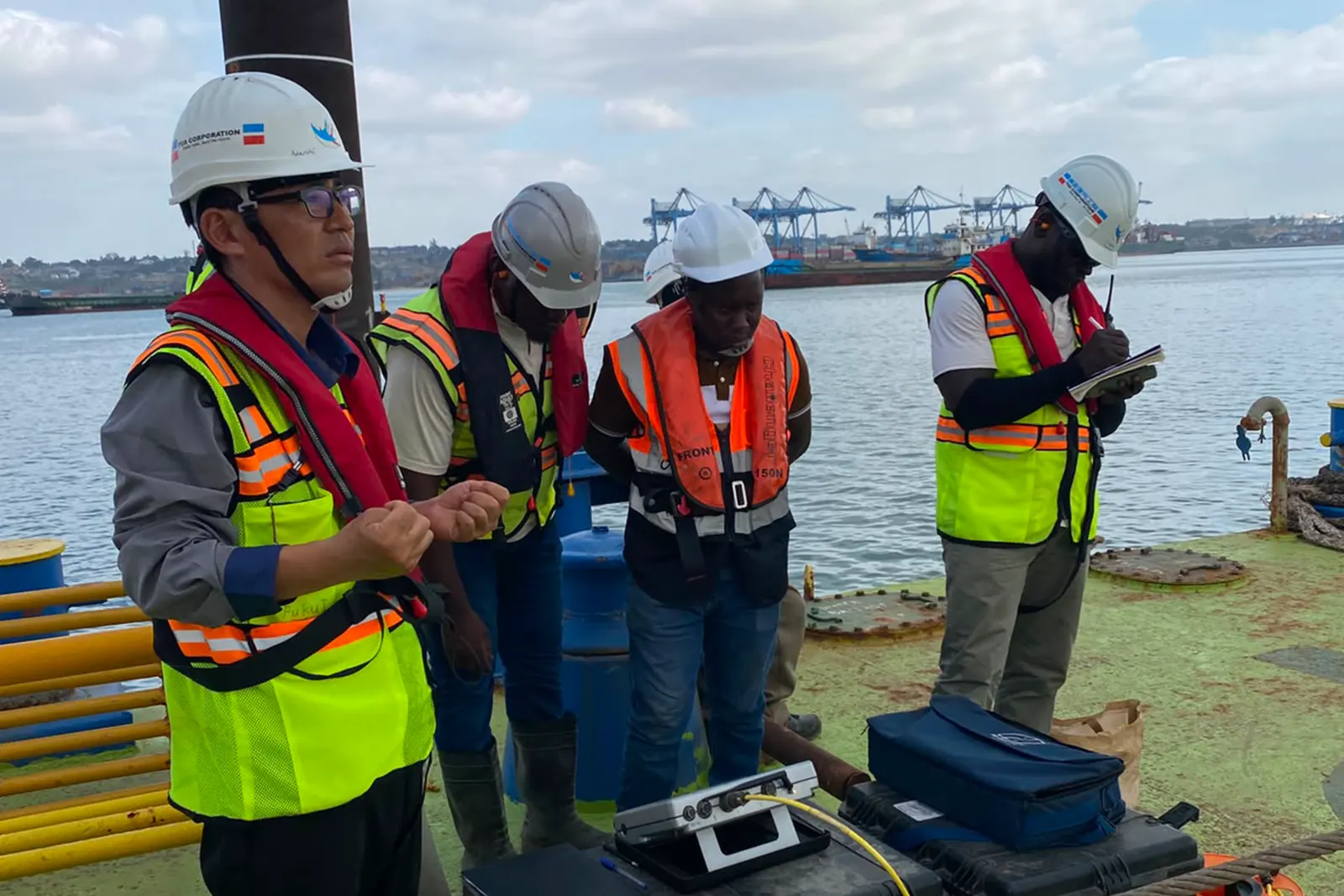
Scope of Services
Our deep foundation testing services range from high strain dynamic load testing to low strain integrity testing. We are always open to listen to client requirements to find out what mix of services would serve them best.
Deep Foundation Testing - Key Services:
- High Strain Dynamic Load Testing (HSDLT))
- Static Load Testing (Vertical Compression Test)
- Lateral Load Testing
- Uplift / Pullout Load Testing
- Cross Hole Sonic Logging (CSL)
- Low Strain Integrity Testing (PIT)
Our Approach
We apply proven construction methodologies, disciplined scheduling, and experienced supervision to ensure on-time delivery and consistent build quality.
Quality & Safety
All works follow certified quality assurance systems and comprehensive safety protocols to minimize risk and ensure long-term durability.
More Services
Start Your Project Confidently
- Deep Foundation Testing Services
1. High Strain Dynamic Load Testing (HSDLT)
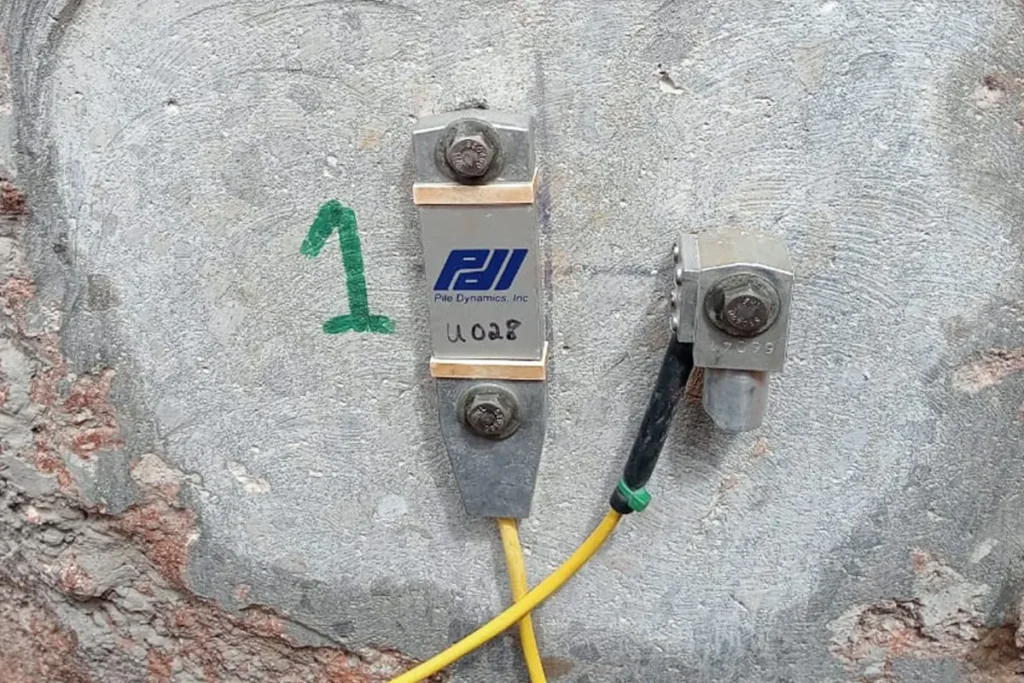
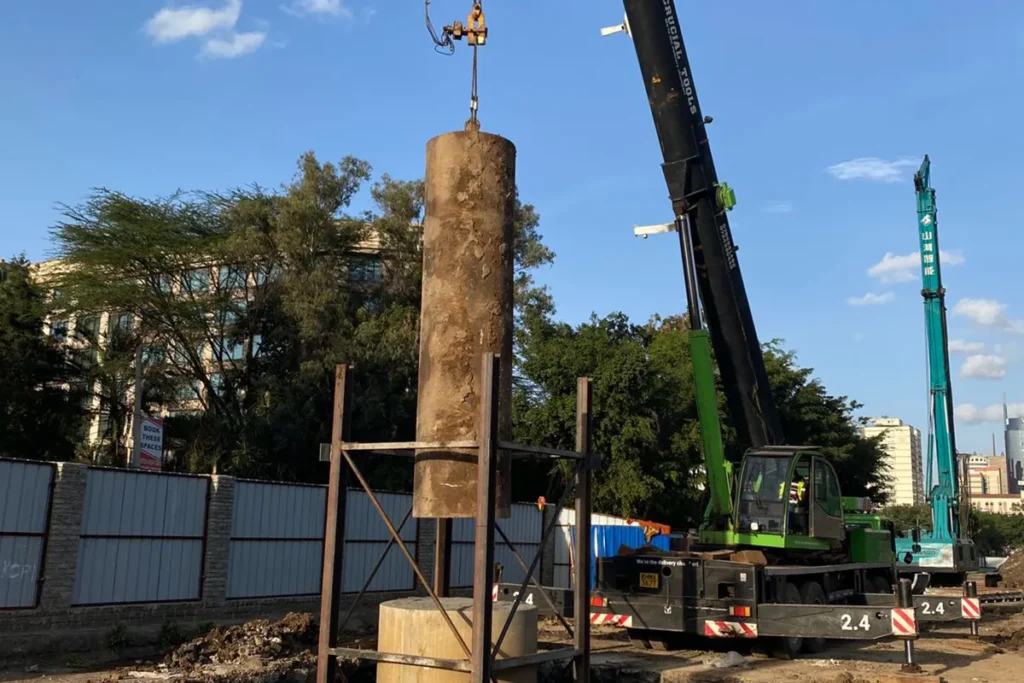
Fig: High strain dynamic load test (HSDLT) for concrete piles in Jangwani bridge Tanzania in July 2025
At Proficient Skills Engineers Ltd, we offer advanced High Strain Dynamic Load
Testing (HSDLT) services to accurately assess the load-bearing capacity, structural
integrity, and stress response of deep foundations, including both driven and castin-
place piles. This testing technique involves delivering a high-energy impact to the
pile head using a drop hammer, generating a compressive stress wave that travels
down the pile. Reflections from the pile toe or changes in soil conditions return to
the surface, where strain gauges and accelerometers installed near the pile head
record force and velocity data over time.
Our engineers perform on-site analysis using the Case Method to obtain quick
and practical estimates of pile capacity and driving stresses. For more precise
interpretation, the data is analyzed using CAPWAP (Case Pile Wave Analysis
Program) a signal-matching software that simulates pile-soil interaction. CAPWAP
iteratively adjusts soil parameters until the modeled response closely matches
measured field data, enabling us to determine the pile’s ultimate static capacity,
shaft and toe resistance, damping behavior, and detect any anomalies or defects in
the pile structure. With our expertise and calibrated testing equipment, Proficient
Skills Engineers Ltd ensures dependable evaluation of foundation systems, helping
clients meet both structural safety and cost-efficiency goals across infrastructure
projects in East and Southern Africa.
2. Static Load Testing (Vertical Compression Test)
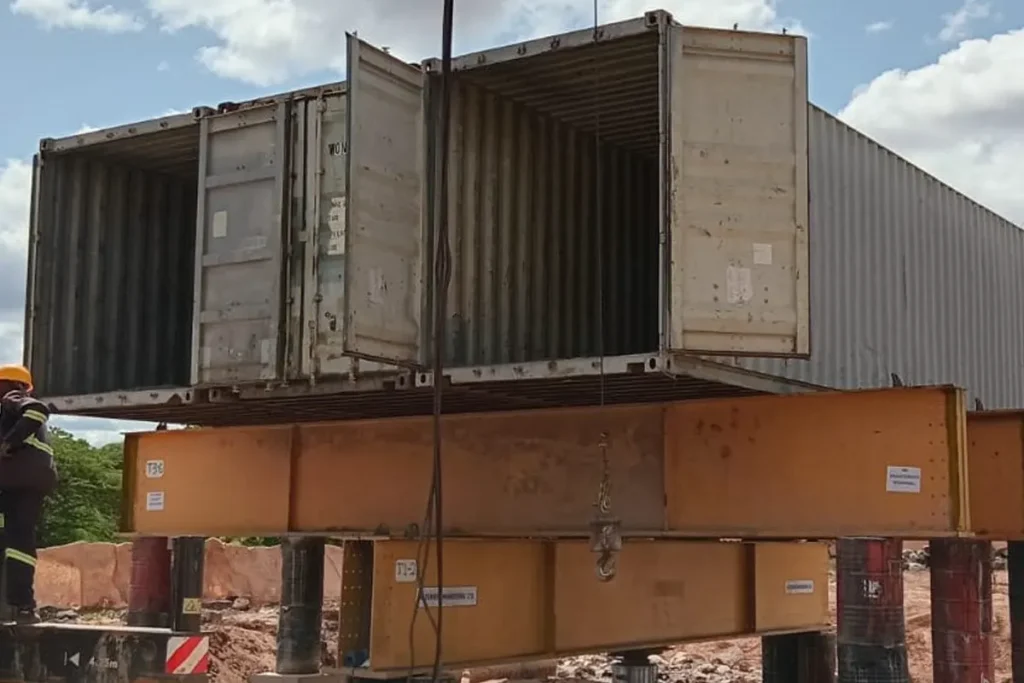
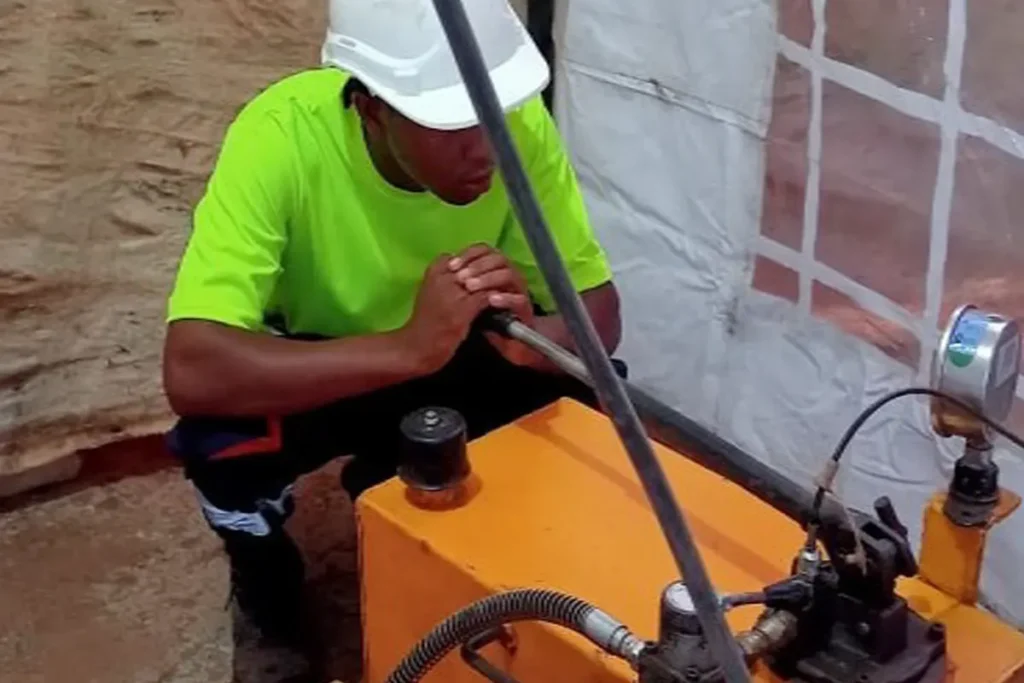
Fig: Static load test by Kentledge method at Garbatula, Isiolo county in May 2025
At Proficient Skills Engineers Ltd, we provide comprehensive Static Load Testing services to determine the ultimate bearing capacity and settlement characteristics of piles, in accordance with international standards and project-specific requirements. Our team is experienced in executing all three major methods of static load testing:
- Kentledge Method: We perform vertical load tests using heavy dead weights such as concrete blocks or steel slabs placed on a secure reaction platform. This method is ideal for sites with sufficient space and is valued for its simplicity and minimal interference with surrounding piles.
- Reaction Pile Method (Anchor Piles): In space-constrained or urban environments, we utilize hydraulic jacks in combination with tension (anchor) piles to apply and resist load through a rigid reaction frame. This setup is suitable for vertical compression, uplift, and lateral load tests, making it highly versatile for various foundation assessments.
- Bi-Directional Load Testing (Osterberg Cell Test): We also offer advanced O-cell testing, where the load is applied internally within the pile shaft using a hydraulically activated cell. This method is especially advantageous for deep foundation systems or locations with restricted access, as it eliminates the need for external reaction structures and allows for efficient high-load testing.
Through these methods, Proficient Skills Engineers Ltd ensures accurate, reliable, and site-specific geotechnical data to support the safe and economic design of foundation systems across a wide range of infrastructure projects.
3. Lateral Load Testing
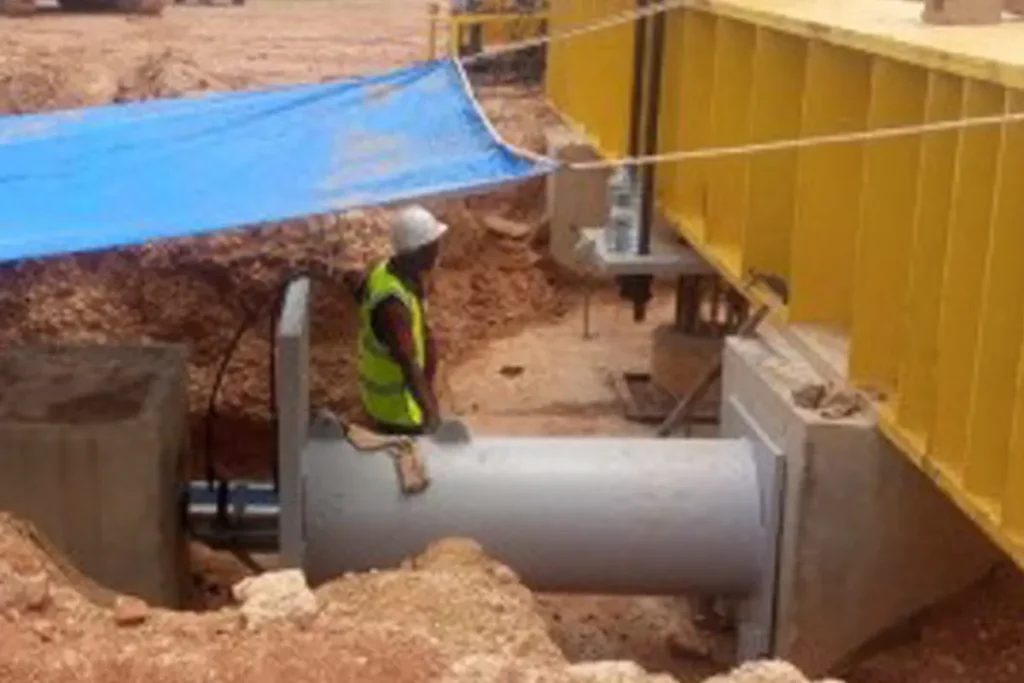
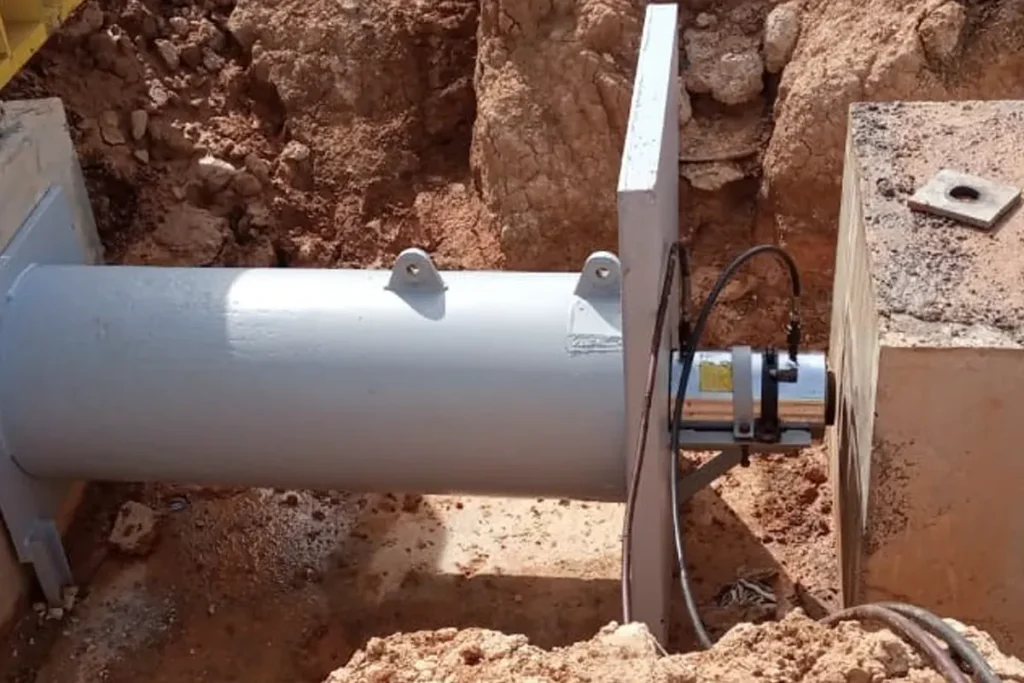
Fig: Image Description
Proficient Skills Engineers Ltd conducts advanced lateral load tests to evaluate how piles respond to horizontal forces, which are common in infrastructures such as offshore foundations, retaining systems, and bridge piers. This testing technique helps determine the lateral stiffness, flexural behavior, and ultimate resistance of a pile embedded in various soil profiles. A horizontal force is gradually applied near the pile head using hydraulic jacks, and the resulting deflections are precisely recorded at different heights using displacement transducers or dial gauges.
To ensure stability during the test, we employ a robust reaction setup, often consisting of tension (anchor) piles or a steel reaction frame, aligned parallel to the test pile. At every load increment, lateral displacement data is captured to develop a load-deflection relationship, which aids in assessing the pile’s performance under lateral stress.
We pay close attention to the setup’s alignment and anchorage to avoid inaccuracies from rotation, slippage, or uneven force distribution. This method is essential in environments with soft topsoil, elevated groundwater levels, or areas susceptible to wind and seismic forces, where lateral stability is a primary design concern
4. Uplift / Pullout Load Testing
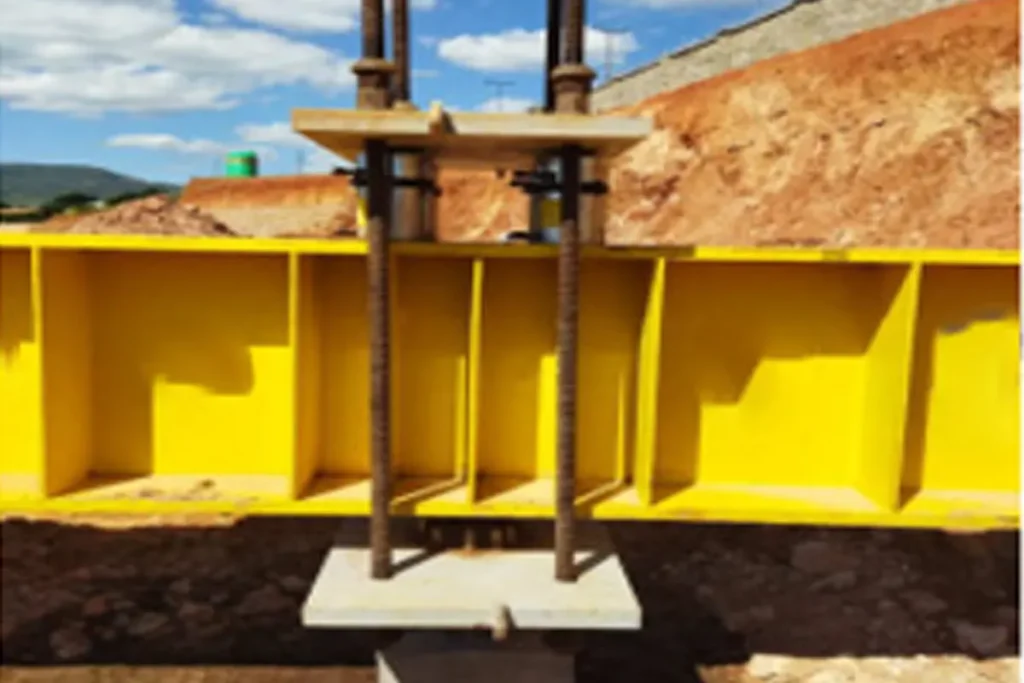
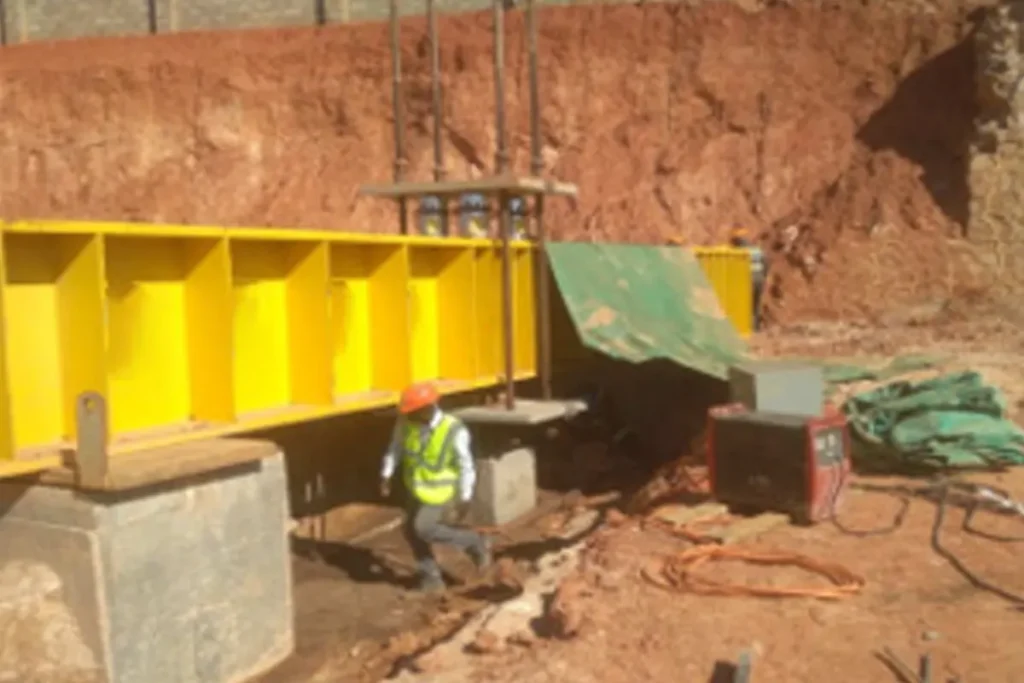
Fig: Image Description
Uplift load testing, also known as tension load testing, is performed to evaluate a pile’s capacity to resist upward or tensile forces that can result from wind uplift, hydrostatic pressure, seismic activity, or overturning moments. These forces are commonly encountered in structures such as transmission towers, elevated tanks, and tall buildings. The test setup involves placing a hydraulic jack between the pile head and a secure reaction system, which may consist of kentledge weights, a steel reaction beam, or adjacent anchor piles. The jack applies a controlled upward force to the test pile while measuring the resulting displacement using dial gauges or linear displacement transducers. The load is applied incrementally and held at each stage to monitor movement and identify creep behavior.
At Proficient Skills Engineers Ltd, this test is conducted with precision to determine the ultimate uplift capacity, verify soil–pile interaction under tension, and ensure that the foundation system can safely withstand design uplift loads. The results are plotted as load displacement curves, which are used to validate the structural safety of tension-loaded foundations.
5. Cross Hole Sonic Logging (CSL)
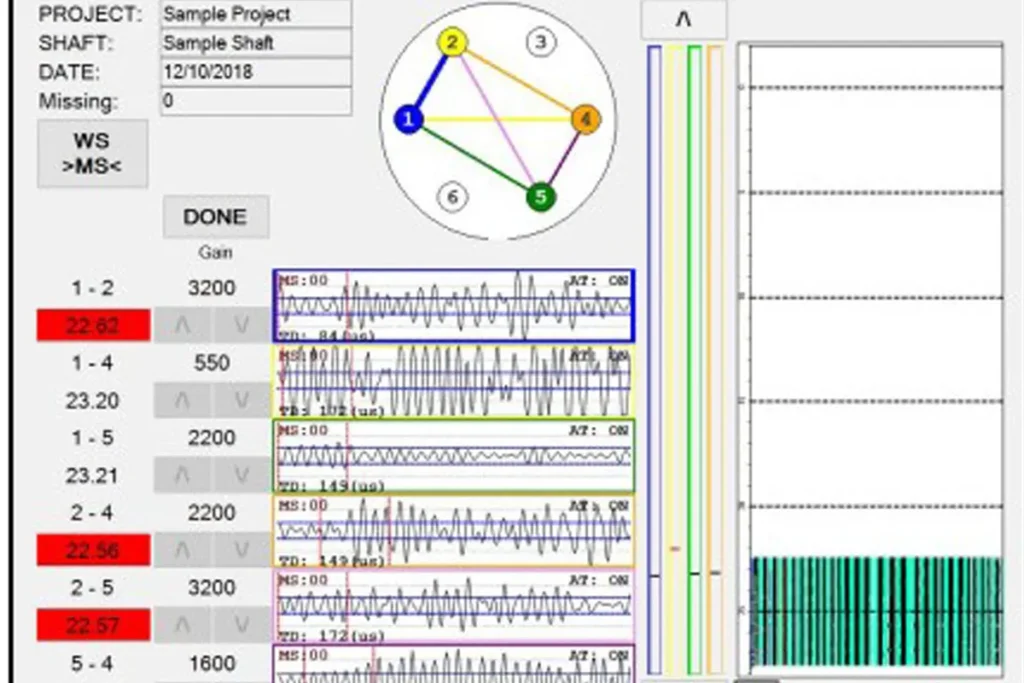
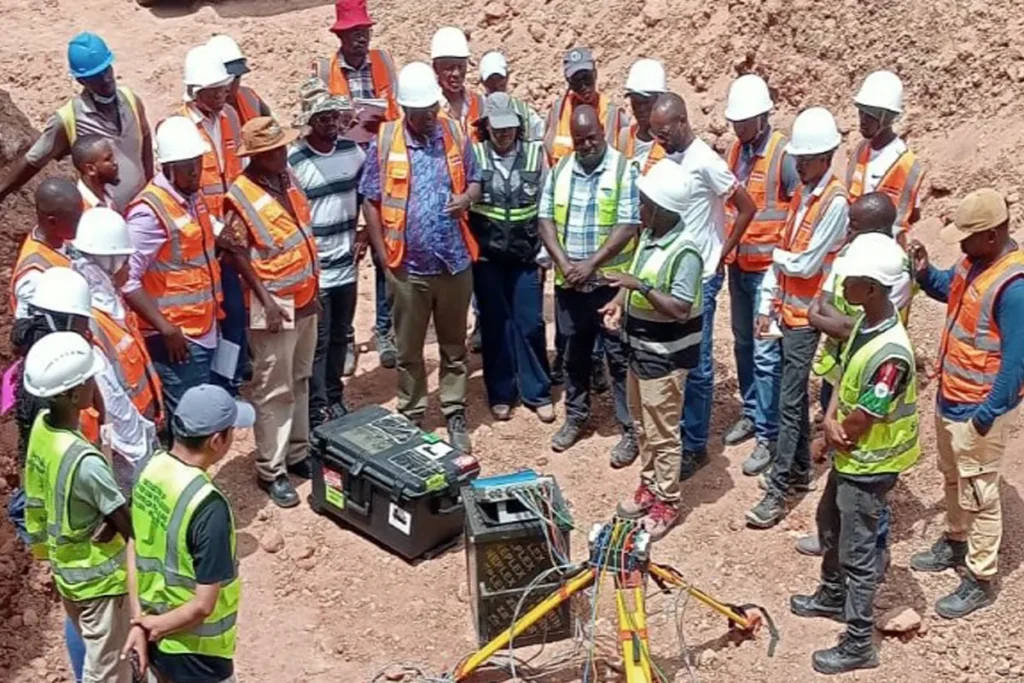
Fig: Cross-hole sonic logging test in Garissa in June 2025
Crosshole Sonic Logging (CSL) is a non-destructive testing technique used to evaluate the integrity and uniformity of concrete in deep foundations such as drilled shafts and bored piles. The procedure involves transmitting ultrasonic pulses between access tubes that are cast into the concrete during construction. At Proficient Skills Engineers Ltd, the test is conducted by inserting a pair of probes into parallel, water-filled tubes. One probe emits ultrasonic signals while the other receives them, recording both the arrival time and the signal strength. In consistent, high-quality concrete, the signals travel at uniform speeds and amplitudes. However, the presence of anomalies such as voids, honeycombing, inclusions, or weak concrete zones can delay the arrival time and reduce signal strength. This allows engineers to identify the location and extent of internal defects, ensuring the reliability and structural soundness of the foundation.
6. Low Strain Integrity Testing (PIT)
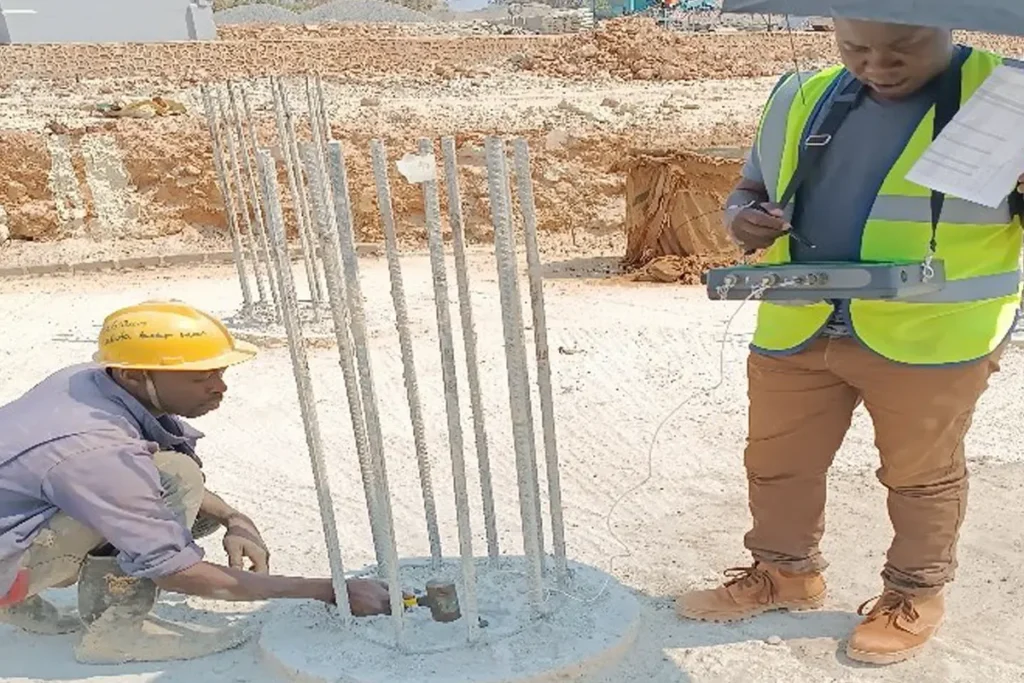
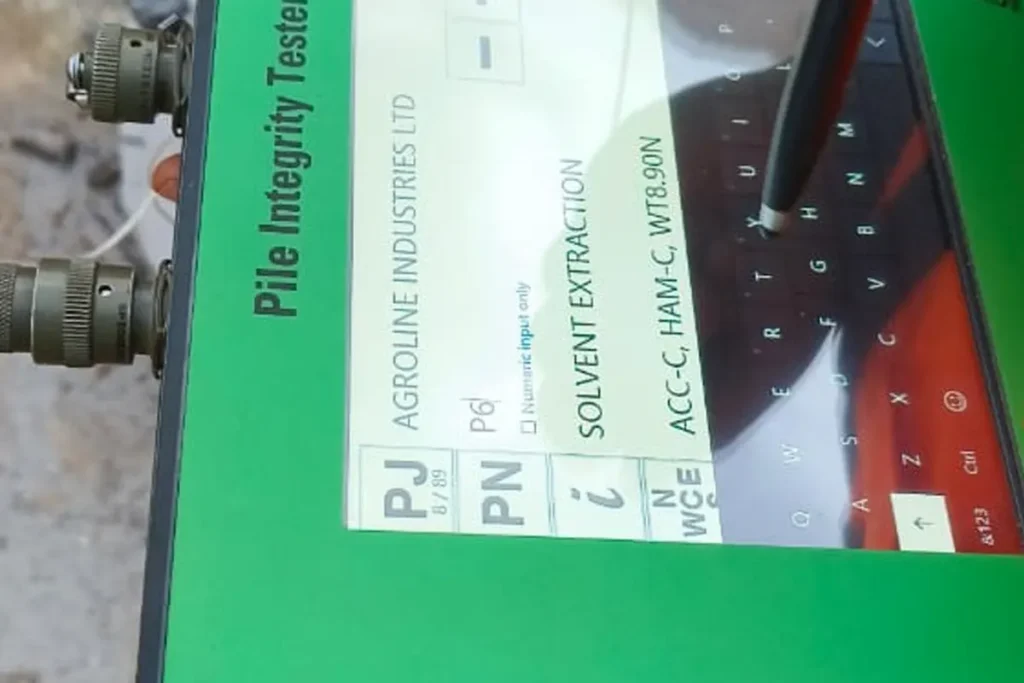
Fig: Image Description
Small impact on pile head generates stress waves reflected back by defects or changes in cross-section. It’s a quick screening method for pile integrity.
Pile Integrity Testing (PIT) is performed by placing an accelerometer on the foundation to be tested and striking the prepared surface with a small handheld hammer. The impact generates a stress wave that travels down the pile and reflects back toward the surface. The accelerometer records the wave propagation and reflection patterns, revealing information about the condition of the pile shaft. A pile without defects typically shows a reflection from the pile toe at a time consistent with its length, while any flaws along the shaft alter the wave’s behavior, indicating the size and location of defects. This test also helps estimate the pile length. At Proficient Skills Engineers Ltd, data collected during the test is initially evaluated on-site and then transferred to PIT-W software for detailed analysis and reporting.