
Geotechnical Investigations
Home – Geotechnical Investigations
- Services
Geotechnical Investigations
Geotechnical investigation is a fundamental component of any civil engineering or infrastructure project, providing essential insights into the subsurface conditions that influence the design, safety, and durability of structures. Proficient Skills Engineers Ltd undertakes systematic studies of soil, rock, and groundwater to determine their physical and mechanical properties, which are critical for selecting appropriate foundation systems, assessing slope stability, and anticipating ground behavior under load.
By integrating site reconnaissance, borehole drilling, in-situ testing, laboratory analysis, and groundwater monitoring, Proficient Skills Engineers Ltd enables engineers to evaluate potential risks such as settlement, landslides, soil liquefaction, or expansive soils. The findings are synthesized into comprehensive geotechnical reports that inform structural design, earthworks planning, and construction methods, ultimately minimizing the risk of structural failure and costly delays. As such, the geotechnical investigation carried out by Proficient Skills Engineers Ltd is not only a technical requirement but a critical investment in the safety, efficiency, and sustainability of any built environment.
Scope of Services
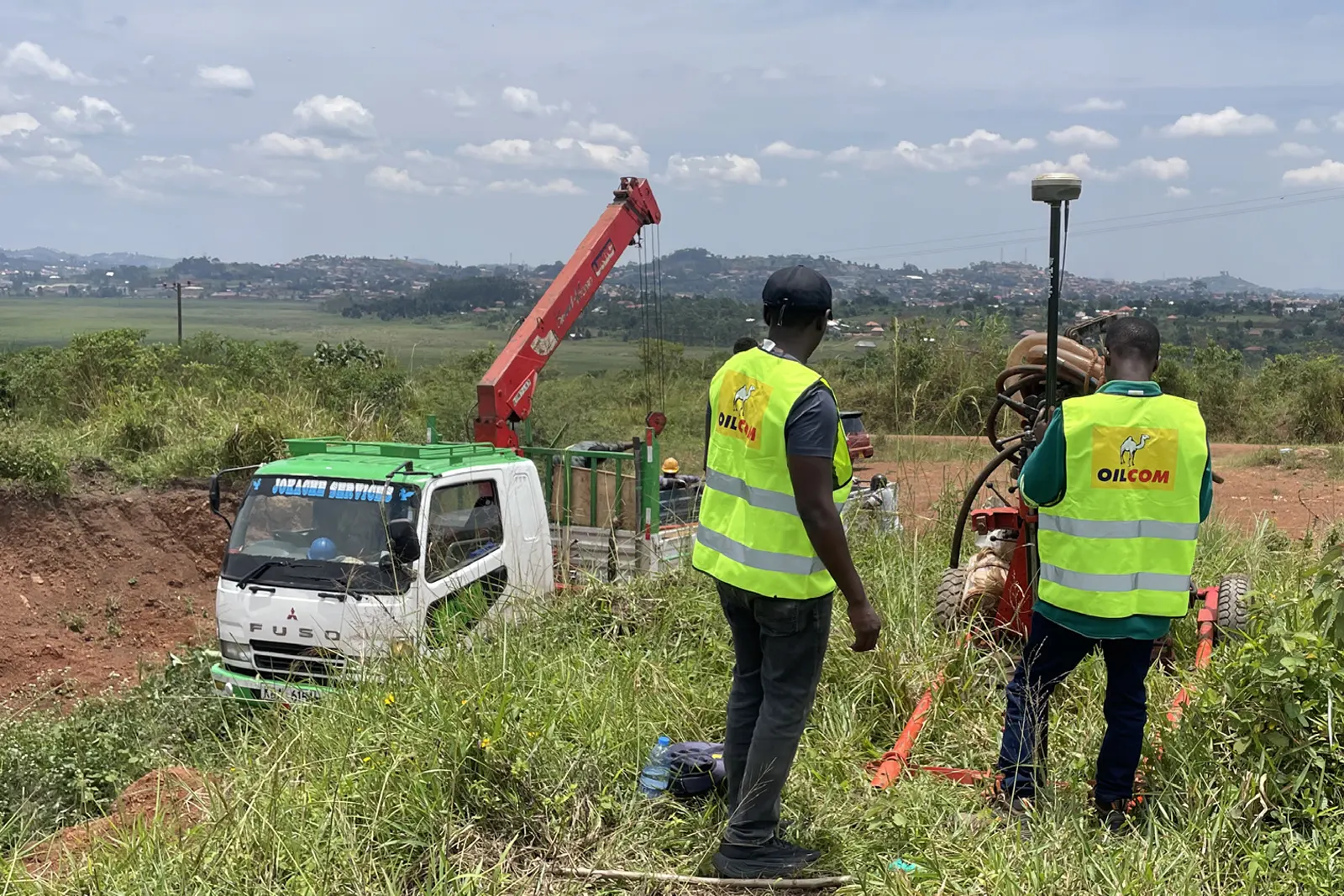
We provide onshore and offshore geotechnical investigations in various environments and terrains. We are always open to listen to client requirements to find out what mix of services would serve them best.
Geotechnical Investigations - Key Services:
- Geotechnical Investigation By Trial Pits
- Geotechnical Investigation By Rig Drilling
Our Approach
We apply proven construction methodologies, disciplined scheduling, and experienced supervision to ensure on-time delivery and consistent build quality.
Quality & Safety
All works follow certified quality assurance systems and comprehensive safety protocols to minimize risk and ensure long-term durability.
More Services
Start Your Project Confidently
- Geotechnical Investigations
1. Geotechnical Investigation By Trial Pits
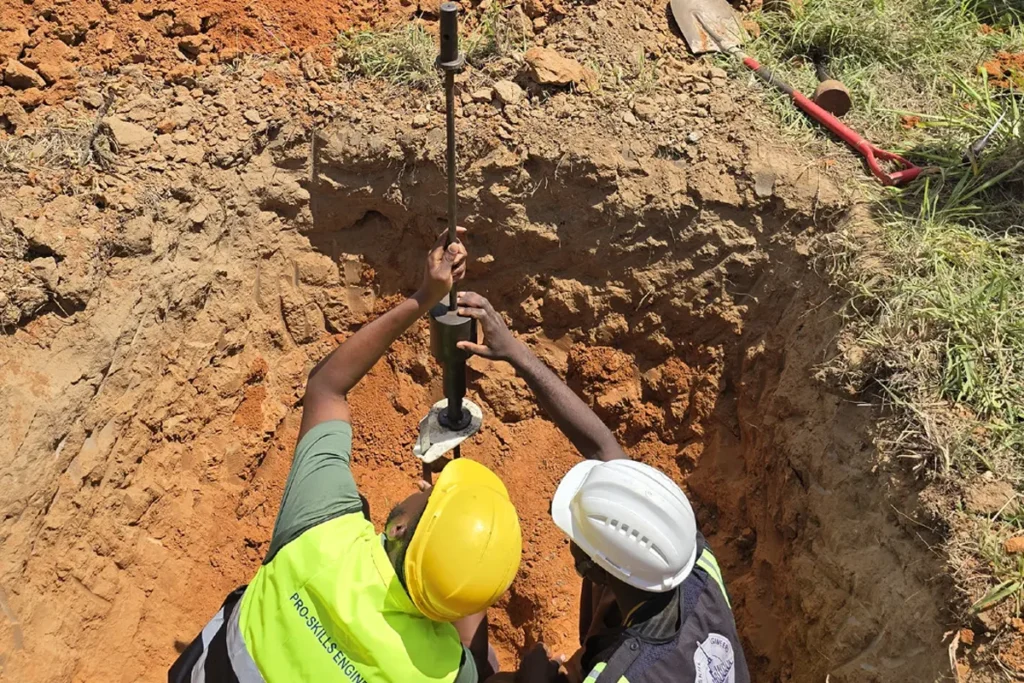
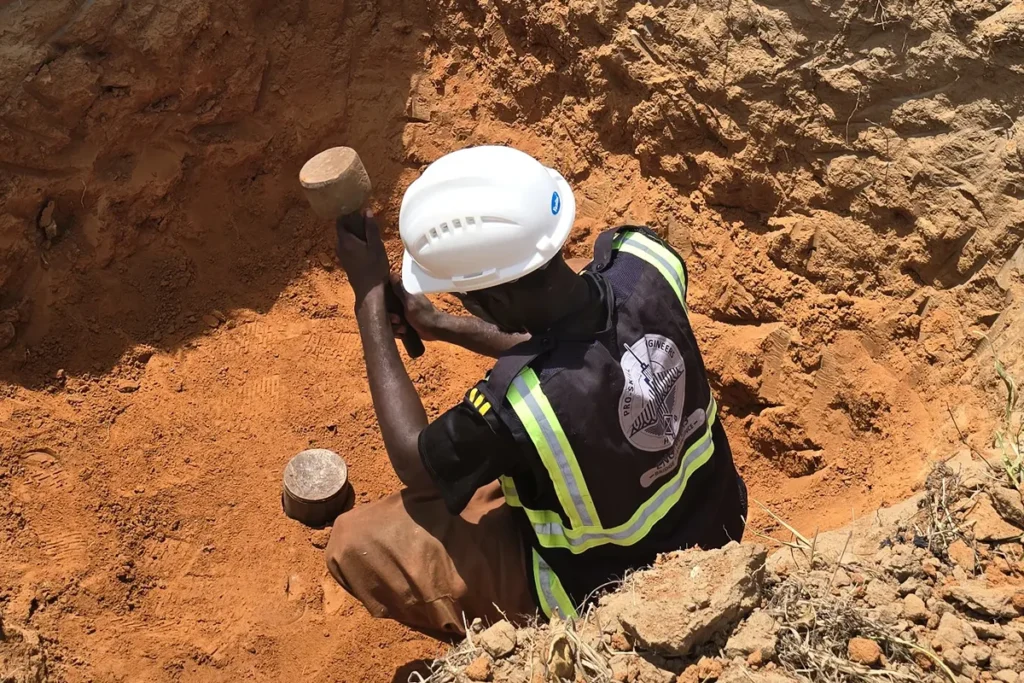
Fig: ProSkills technical team conducting field geotechnical investigations, including the collection of undisturbed soil samples and Direct Cone Penetrometer Testing (DCPT), at Moi International Airport
Subsurface exploration is conducted through trial pits, usually excavated to depths of 1 to 4 meters. These allow for visual examination of the soil profile and collection of disturbed samples. Simple in-situ tests, such as the Dynamic Cone Penetration (DCP) test, In situ CBR, can be performed in the pits to estimate soil strength and bearing capacity, particularly for shallow foundation assessments.
2. Geotechnical Investigation By Rig Drilling
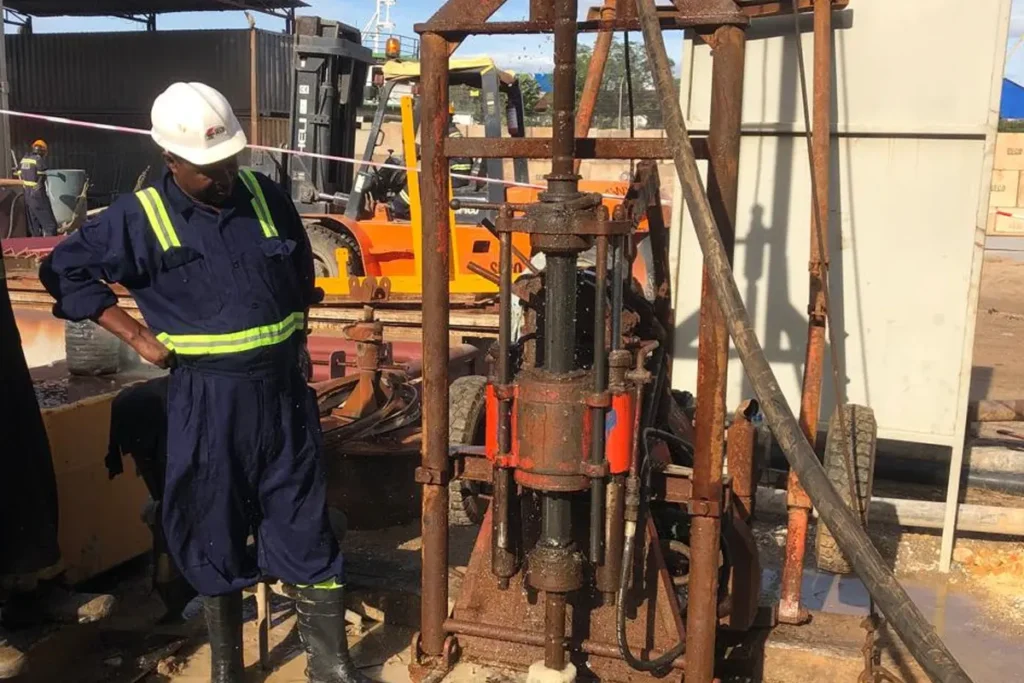
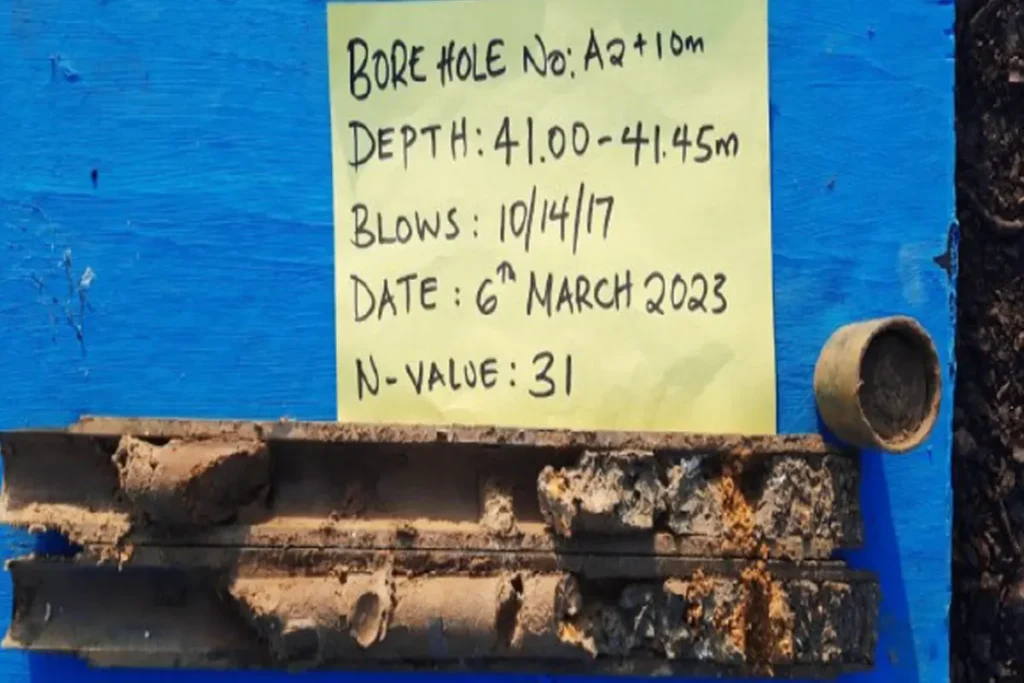
Fig: Geotechnical investigation in river Pangani , Tanga Tanzania in March 2023
For more detailed and deeper investigations, drilling, boring, and coring methods are employed. Boreholes are drilled using rotary or percussion techniques to penetrate to the required depth, allowing for both disturbed and undisturbed sampling. Standard Penetration Tests (SPT) and Cone Penetration Tests (CPT) are commonly carried out during drilling to determine soil resistance and stratification.